


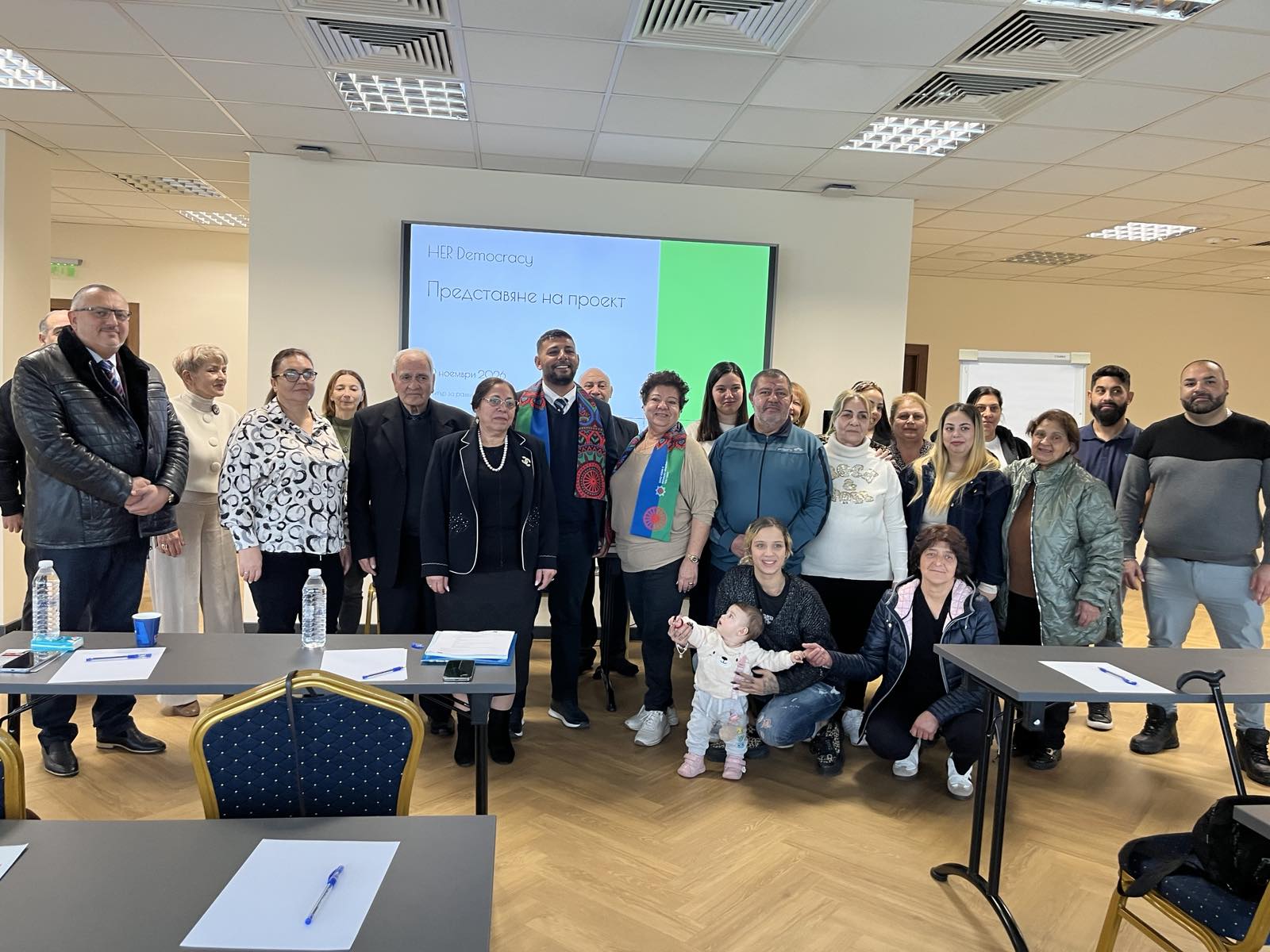
The Center for Sustainable Communities Development (CSCD) organised a Community Dialogue in Sofia, dedicated to the challenges facing Roma women in political and civic participation and the opportunities for their more active involvement in democratic processes.
The event brought together representatives of civil society organisations, Roma activists, public figures and political representatives to jointly explore solutions for a more representative and inclusive democracy.
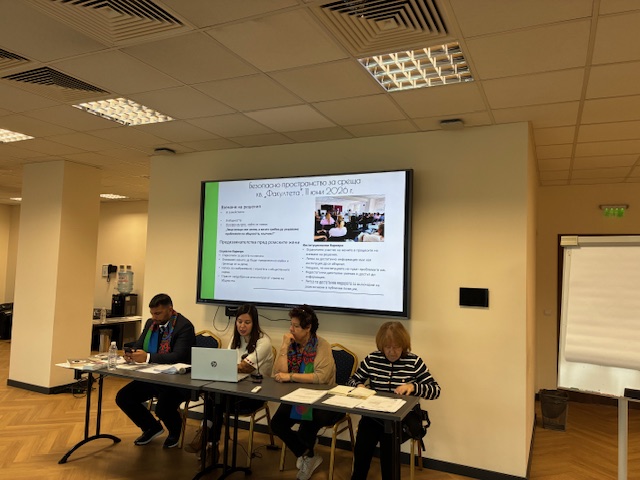
On 10 November 2026, a Community Dialogue on the topic of “Inclusive Democracy” was held in Sofia, organised by the Center for Sustainable Communities Development (CSCD) within the framework of the HER Democracy project.
The event brought together epresentatives of non-governmental organisations, civic activists, one sitting Member of Parliament of Roma origin and one former Member of Parliament of Roma origin.
The main focus of the discussion was the participation of Roma women in elections, local governance, decision-making structures and civic movements, as well as the barriers that limit their activity and representation.
Roma Women: From Invisible Presence to Meaningful Participation
The meeting was opened by Lilyana Kovacheva, a facilitator of Roma origin, who highlighted the importance of the long-standing cooperation with CSCD in the field of Roma women's political empowerment.
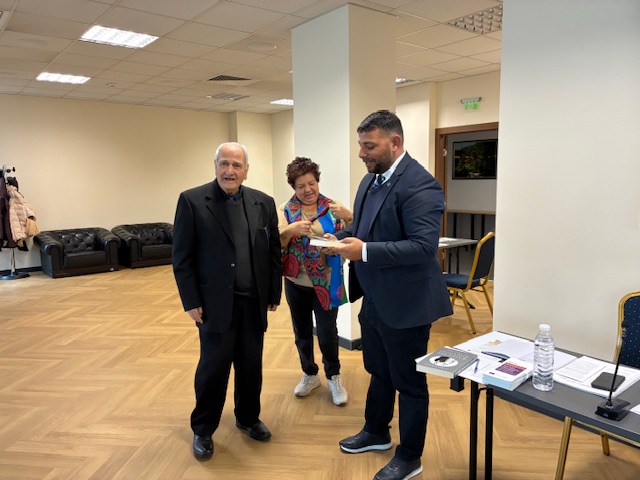
A special guest at the event was Member of Parliament Marin Tihomirov, who shared his personal observations on the challenges facing the Roma community and the need to develop sustainable local leadership.
In his speech, he began by expressing his gratitude to his mother, who had raised seven children on her own and brought them up to become honest and hardworking people. This personal example provided an opportunity to highlight the strength of women in the Roma community, while also addressing the lack of self-confidence and opportunities for them to assume leadership positions.
“Roma people have great potential“ was one of the key messages of his address.
Tihomirov also drew attention to the persistent negative stereotypes surrounding Roma neighbourhoods, which are often portrayed exclusively through the lens of crime and social problems. According to him, such perceptions fail to reflect the rich culture, humanity and solidarity within the community.
He also shared specific examples from the Filipovtsi neighbourhood, relating to the difficulties of collectively defending citizens' rights. These included the problem of high water bills based on outdated household population records, as well as unresolved issues concerning housing ownership and the legalisation of homes.
As a particularly important priority, the MP emphasised the need for self-initiative and the development of local communities capable of formulating and advocating for shared solutions. In his view, education must be one of the leading priorities in this work.
The Need to Restore Dialogue Between Communities and Institutions
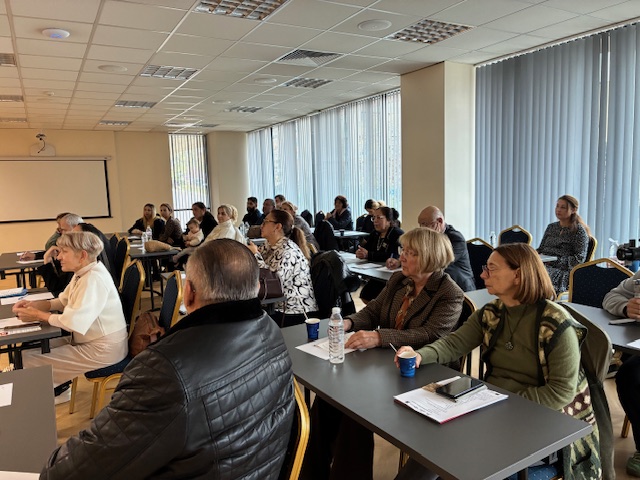
Other civil society representatives also contributed to the discussion, raising concerns about the regression of policies supporting Roma inclusion and the weakening of mechanisms for cooperation between institutions and civil society organisations.
Dimitar Georgiev noted that a regression in policies supporting the Roma population has been observed since 2012. He recalled the practice of local initiative committees, which in the past provided a more structured dialogue between citizens and municipal authorities. According to him, civil society organisations are increasingly being excluded from decision-making processes.
Housing policy and access to civil registration were also identified as important priorities. The contribution of Roma activists and civil society organisations to the 2025 amendments to the Civil Registration Act was highlighted, particularly the introduction of the so-called “official address” mechanism.
This mechanism provides an opportunity for people who cannot present documents proving ownership or the right to use a property to obtain address registration under the conditions set out in the law. In practice, this represents an important step towards overcoming administrative barriers that prevent vulnerable citizens from accessing identity documents and exercising their fundamental civil, social and educational rights.
Three Working Groups – Three Dimensions of Democratic Inclusion
The main part of the Community Dialogue was dedicated to discussions in three thematic working groups, facilitated by Nancy Borisova, Stanimira Hadjimitova and Lilyana Kovacheva. Participants explored specific obstacles to democratic participation and developed proposals for possible solutions.
1. Electoral Participation: Representation, Trust and Free Choice
The working group facilitated by Nancy Borisova focused on the challenges facing the active participation of the Roma community in democratic elections.
Participants were presented with statistical data from five Roma neighbourhoods in different parts of Bulgaria, showing an extremely low voter turnout of approximately 2–3%, compared to the national average of 22.998% in the presidential elections under discussion.
The discussion identified several key challenges:
- Insufficient representation of Roma people in local and national government.
- Lack of direct contact between candidates for elected office and residents of Roma neighbourhoods.
- Dependence on informal intermediaries, some of whom are associated with vote-buying and economic exploitation.
- Lack of trust both towards political representatives and among members of the community themselves.
- Insufficient participation of educated and active Roma people in political life.
Participants stressed that candidates for mayoral and parliamentary positions should personally visit Roma neighbourhoods and speak directly with residents, rather than relying on intermediaries who do not necessarily represent the community's actual interests.
Proposed solutions included the development of local civic initiatives, encouraging peaceful collective advocacy for rights, and supporting a new generation of educated and engaged Roma leaders.
Particular attention was paid to education and the need to address early marriages, which can restrict the educational and life opportunities of young girls.
One of the key conclusions was that democratic participation cannot be achieved solely through calls to vote. People need to have trust, recognise their own representatives and believe that their participation can lead to meaningful change.
2. Participation in Local Government: Women's Empowerment and Building Local Leadership
The second working group, facilitated by Stanimira Hadjimitova, focused on the participation of Roma women in local government and decision-making structures.
Participants discussed the influence of closed community environments, dependencies, economic insecurity and lack of trust on opportunities for civic engagement.
It was noted that in some neighbourhoods, leadership is concentrated around intermediaries who do not always possess the necessary competencies or community legitimacy. The discussion also addressed the role of economic dependencies, including indebtedness to pawnshops, as a factor that can restrict free political choice.
The following proposals were put forward to encourage women's participation:
- Identifying 4–5 active women in each neighbourhood and providing targeted support to develop their leadership skills.
- Establishing mixed groups involving representatives of both Roma and Bulgarian communities.
- Engaging families as partners in the process of women's empowerment.
- Encouraging the participation of women with social influence within the community.
- Developing opportunities for economic independence through training and the acquisition of professional skills.
- Involving women who hold positions of authority within large families and extended family networks, as they can provide additional support for women's leadership.
The discussion demonstrated that the political empowerment of Roma women is connected not only to access to institutions, but also to family dynamics, economic independence and community support.
3. Civic Engagement and Women's Associations: Overcoming Fear and Distrust
The third working group, facilitated by Lilyana Kovacheva, focused on civic engagement and opportunities to establish sustainable women's associations.
The discussion explored different perspectives and even included a moment of disagreement between men and women, which was overcome through dialogue and mutual respect.
The main barriers to civic engagement identified by participants were:
- Lack of confidence in one's own abilities.
- Disregard for the concerns of others.
Participants also identified concrete steps to overcome these barriers: greater courage, confidence in one's own potential, personal initiative and solidarity with people experiencing violence and discrimination.
Special attention was given to the need for women to demonstrate solidarity and support one another, particularly in cases of violence against women.
What Does the Community Dialogue Tell Us?
The discussions during the event highlighted one common challenge running through all three thematic areas: the lack of sufficient unity and trust, both within the Roma community and between its representatives and the wider civil society.
Mutual distrust, competition and the public discrediting of Roma leaders and activists undermine their legitimacy and make it more difficult for them to represent the community before institutions and participate in decision-making and policymaking processes.
At the same time, the discussions demonstrated that there are active individuals willing to work towards change. However, better coordination among them, support for new local leaders and the establishment of sustainable mechanisms for cooperation with institutions are essential.
It is particularly important that Roma women are not viewed merely as a vulnerable group in need of support, but as active citizens with ideas, leadership potential and the capacity to contribute to policymaking.
Inclusive democracy begins when people are not simply given the opportunity to be heard, but are also given a meaningful place in the processes where decisions affecting their lives are made.
The project is funded by the European Union. Citizens, Equality, Rights and Values (CERV) programme. Project ID: 101252779